Specialty Epoxy Flooring Los Angeles

Specialty epoxy flooring is designed for environments that require more than a basic decorative coating. These systems can be selected for specific performance needs such as chemical resistance, moisture protection, impact resistance, heat exposure, static control, slip resistance, antimicrobial properties, and heavy-duty traffic.

Specialty epoxy flooring may be used in garages, laboratories, factories, warehouses, commercial kitchens, healthcare facilities, auto shops, manufacturing spaces, clean work areas, storage rooms, and other demanding environments.

The correct flooring system depends on how the space is used, what the floor is exposed to, and the condition of the existing concrete. Proper preparation and product selection are critical because different specialty systems are designed to solve different problems.

Custom Specialty Epoxy Flooring Solutions

No two commercial or industrial properties operate exactly the same way.

A warehouse may need abrasion resistance and traffic markings. A laboratory may require chemical resistance and static control. A commercial kitchen may need slip resistance and seamless cove bases. An automotive facility may require oil resistance and heavy-duty protection.

Specialty epoxy flooring allows the system to be designed around these specific needs.

Where Can Specialty Epoxy Flooring Be Installed?

Specialty epoxy flooring can be used in many demanding environments, including:

  • Garages
  • Warehouses
  • Factories
  • Laboratories
  • Commercial kitchens
  • Auto shops
  • Healthcare facilities
  • Manufacturing plants
  • Machine shops
  • Aircraft hangars
  • Clean rooms
  • Distribution centers
  • Food processing areas

The coating system should always be selected according to the actual conditions of the facility.

Chemical Resistant Epoxy Flooring

Chemical resistant epoxy flooring is designed for spaces where the floor may be exposed to cleaners, oils, solvents, acids, alkalis, automotive fluids, and other substances.

These systems are commonly used in:

  • Laboratories
  • Manufacturing facilities
  • Auto repair shops
  • Commercial kitchens
  • Maintenance areas
  • Industrial buildings
  • Chemical storage spaces

Chemical resistance varies between products, so the coating should be selected based on the specific substances expected in the environment.
Oil Resistant Epoxy Flooring

Oil can quickly stain and penetrate untreated concrete.

Oil resistant epoxy flooring creates a less porous surface that can make cleanup easier and help reduce staining.

It is especially useful in:

  • Residential garages
  • Commercial garages
  • Mechanic shops
  • Auto dealerships
  • Service centers
  • Workshops

Spills should still be cleaned promptly to protect the appearance and performance of the floor.

Stain Resistant Epoxy Flooring

Stain resistant epoxy flooring is designed to provide a more maintainable surface in areas where spills are common.

This type of system can be useful in:

  • Garages
  • Retail spaces
  • Workshops
  • Commercial kitchens
  • Utility areas
  • Industrial spaces

A protective topcoat can improve resistance to certain staining materials and make routine cleaning easier.

Waterproof Epoxy Flooring

Epoxy flooring can create a seamless surface that helps resist water penetration from above when properly installed.

Water-resistant or waterproof-style systems may be useful in:

  • Utility rooms
  • Commercial kitchens
  • Laundry areas
  • Certain wet processing spaces
  • Service rooms

The entire flooring system, including joints, drains, edges, and transitions, should be considered when water exposure is significant.

Moisture Resistant Epoxy Flooring

Moisture resistant epoxy systems are designed for areas where moisture may be present on or within the concrete.

Before installation, the slab should be evaluated for moisture vapor transmission.

Depending on the results, the flooring system may include:

  • Moisture-control primers
  • Vapor-mitigating coatings
  • Specialized epoxy layers
  • Protective topcoats

Moisture-resistant systems are commonly considered for basements, older slabs, commercial buildings, and certain industrial spaces.

Heat Resistant Epoxy Flooring

Some environments expose floors to elevated temperatures. Heat resistant epoxy systems may be used in selected industrial, commercial, or processing areas.

Applications can include:

  • Manufacturing spaces
  • Mechanical rooms
  • Commercial kitchens
  • Industrial workshops

The correct system depends on the actual temperature range, duration of exposure, and whether the heat is direct or intermittent.

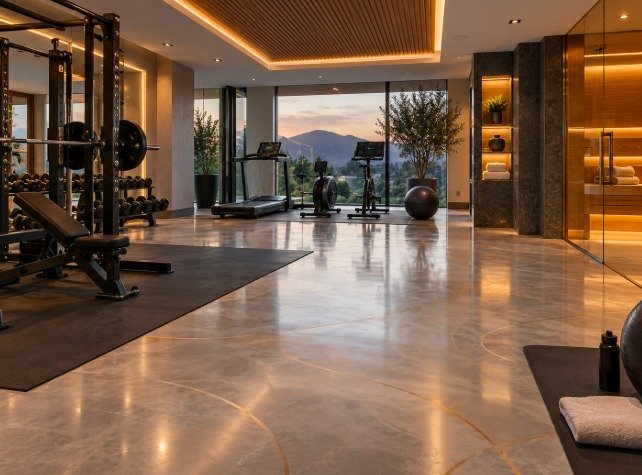
Home gym with a glossy stone-look impact and UV resistant epoxy floor and large windows

Impact Resistant Epoxy Flooring

Impact resistant epoxy flooring is designed for areas where heavy tools, equipment, carts, or materials may strike the floor.

These systems can provide added protection in:

  • Workshops
  • Warehouses
  • Manufacturing facilities
  • Service areas
  • Industrial garages
  • Maintenance shops

The flooring system should be selected according to the expected level of impact and traffic.

UV-Resistant Flooring

Traditional epoxy can discolor or yellow when exposed to strong sunlight for extended periods. In areas with UV exposure, a UV-stable topcoat such as polyaspartic or polyurethane may be used over the epoxy system.

UV-resistant flooring is useful in:

  • Garages with open doors
  • Showrooms
  • Entry areas
  • Spaces with large windows
  • Certain covered exterior areas

The exact system should be chosen according to the amount of sunlight exposure.

UV-stable polyaspartic flooring

Heavy-Duty Epoxy Flooring

Heavy-duty epoxy flooring is used in demanding commercial and industrial environments.

These systems may include thicker coatings, mortar layers, broadcast aggregates, and high-performance topcoats.

Heavy-duty epoxy can be used in:

  • Warehouses
  • Factories
  • Distribution centers
  • Machine shops
  • Loading areas
  • Industrial workshops
  • Commercial garages

The system can be customized based on traffic, chemical exposure, and operational demands.

High-Build Epoxy Flooring

High-build epoxy flooring uses thicker coating layers than standard thin-film systems.

It can provide better coverage and added durability in demanding environments.

High-build systems may be used in:

  • Warehouses
  • Factories
  • Workshops
  • Commercial garages
  • Industrial areas

The thickness and product type should match the expected traffic and use.

Epoxy Mortar Flooring

Epoxy mortar systems combine epoxy resin with aggregate to create a very thick and durable flooring layer.

These systems may be used to:

  • Repair damaged concrete
  • Restore worn floors
  • Create heavy-duty surfaces
  • Fill deeper defects

Epoxy mortar is often used in industrial and commercial applications.

Quartz Epoxy Flooring

Quartz epoxy systems use colored or natural quartz aggregate broadcast into the coating. These systems provide texture, decorative appearance, and strong performance.

Quartz flooring may be used in:

  • Commercial kitchens
  • Restrooms
  • Locker rooms
  • Laboratories
  • Healthcare facilities
  • High-traffic commercial areas

Slip resistance can be adjusted based on the amount of aggregate and topcoat.

Self-Leveling Epoxy Flooring

Self-leveling epoxy creates a smooth, seamless surface over properly prepared concrete. It can be useful for commercial and industrial spaces where a flat, uniform appearance is desired.

Applications may include:

  • Warehouses
  • Laboratories
  • Manufacturing spaces
  • Showrooms
  • Commercial interiors

Proper preparation is essential to achieve a consistent finish.

Anti-Slip Specialty Epoxy Flooring

Slip resistance is important in areas where floors may become wet, oily, or contaminated. Anti-slip additives can be incorporated into specialty epoxy systems to create more traction.

These systems are commonly used in:

  • Commercial kitchens
  • Workshops
  • Auto shops
  • Warehouses
  • Entry areas
  • Industrial spaces

The texture level should be balanced with cleaning and maintenance requirements.

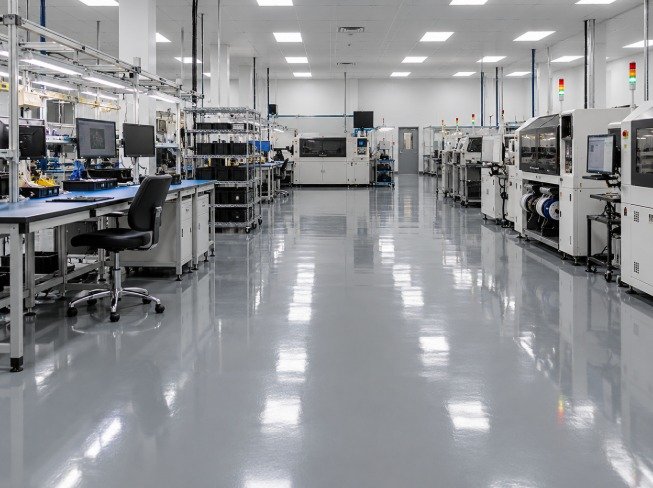
Electronics manufacturing lab with a seamless gray ESD static control epoxy floor

Static Control Epoxy Flooring

Static control epoxy flooring is designed for environments where electrical static must be managed. These systems can help dissipate or control static electricity when properly installed as part of a complete ESD system.

Static control flooring may be used in:

  • Electronics manufacturing
  • Data centers
  • Laboratories
  • Clean rooms
  • Electronics assembly areas

The system should be designed according to the electrical requirements of the facility.

ESD Epoxy Flooring

ESD epoxy flooring is specifically designed for electrostatic discharge control. It is commonly used where sensitive electronic components or equipment could be damaged by static electricity.

Applications may include:

  • Electronics manufacturing
  • Aerospace facilities
  • Server rooms
  • Medical equipment areas
  • Laboratories

ESD systems require proper installation, grounding, and testing to verify performance.

Laboratory Epoxy Flooring

Laboratories may require flooring that resists chemicals, stains, and frequent cleaning.

Specialty laboratory epoxy can provide a seamless and professional surface.

Chemical resistance and static control may also be required depending on the facility.

Possible areas include:

  • Research labs
  • Testing rooms
  • Medical laboratories
  • Industrial labs
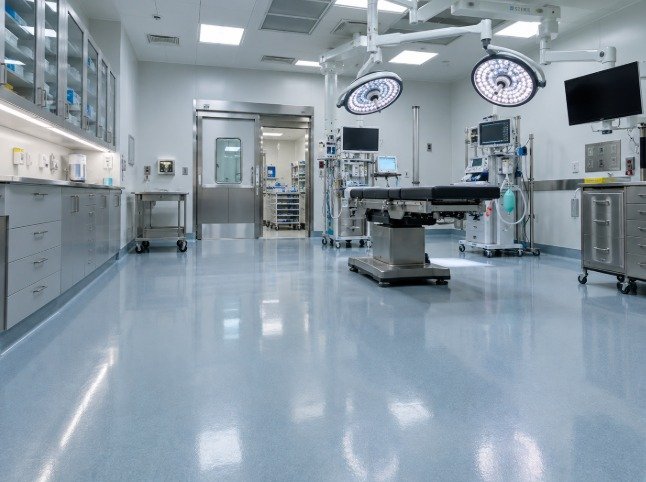
Hospital operating room with a seamless light blue antimicrobial epoxy floor

Healthcare Epoxy Flooring

Healthcare environments may use specialty epoxy where seamless, easy-to-clean surfaces are needed.

Applications can include:

  • Treatment rooms
  • Laboratories
  • Utility spaces
  • Storage rooms
  • Service corridors

Antimicrobial additives and slip-resistant textures may also be considered depending on the facility.

Antimicrobial Epoxy Flooring

Antimicrobial epoxy flooring is designed for environments where cleanliness and hygiene are especially important. These systems may incorporate additives or materials intended to help inhibit microbial growth on the floor surface.

Possible applications include:

  • Healthcare facilities
  • Laboratories
  • Veterinary clinics
  • Food preparation areas
  • Certain processing spaces

The flooring system should be selected based on facility requirements and cleaning procedures.

Clean Room Epoxy Flooring

Clean rooms may require seamless flooring with minimal joints and controlled surface properties. Specialty epoxy can be used to create a smooth, easy-to-clean finish.

Static control and antimicrobial systems may also be required depending on the facility.

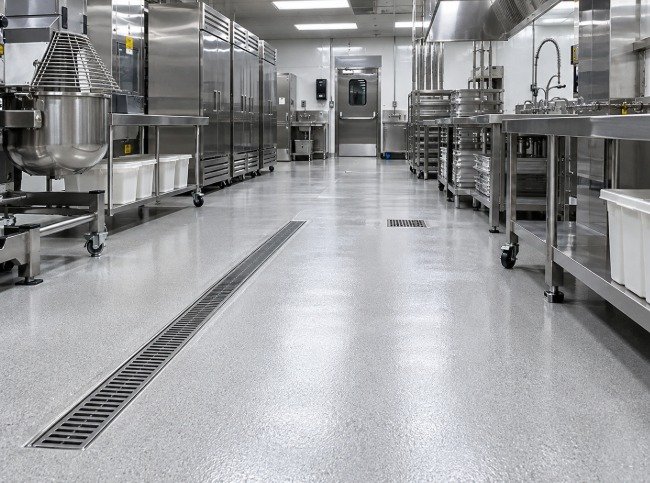
Commercial kitchen with a slip-resistant quartz epoxy floor and trench drains

Commercial Kitchen Epoxy Flooring

Commercial kitchens need flooring that can handle grease, food spills, cleaning chemicals, moisture, and frequent washing.

Specialty epoxy systems can be designed with:

  • Chemical resistance
  • Slip-resistant texture
  • Seamless surfaces
  • Cove base systems
  • Heavy-duty topcoats

Proper drainage and surface preparation are important parts of the installation.

Food Processing Epoxy Flooring

Food processing facilities often require seamless flooring that can handle frequent cleaning, moisture, and chemical exposure.

Specialty epoxy systems may be used in:

  • Processing areas
  • Packaging rooms
  • Storage spaces
  • Commercial kitchens
  • Wash-down areas

The flooring system should be selected according to sanitation procedures, temperature changes, and chemical exposure.

Cove Base Epoxy Flooring

Cove base systems create a seamless transition between the floor and wall.

This helps reduce corners where dirt, liquids, or debris can collect.

It can make cleaning and sanitation easier.

Cove base epoxy is commonly used in:

  • Commercial kitchens
  • Laboratories
  • Healthcare facilities
  • Processing areas
  • Industrial spaces

Automotive Specialty Epoxy Flooring

Automotive facilities expose floors to oils, fuels, chemicals, heavy equipment, vehicle traffic, and tools.

Specialty epoxy can be used in:

  • Auto repair shops
  • Dealership service bays
  • Tire shops
  • Body shops
  • Commercial garages

Oil resistance, chemical resistance, and impact resistance are common priorities.

Warehouse Specialty Epoxy Flooring

Warehouses require floors that can handle forklifts, pallet jacks, carts, racks, and constant traffic.

Specialty epoxy systems can include:

  • High-build coatings
  • Slip-resistant finishes
  • Traffic markings
  • Chemical-resistant layers
  • Heavy-duty topcoats

Different zones within the warehouse can also be color-coded.

Manufacturing Facility Epoxy Flooring

Manufacturing environments can place heavy demands on flooring.

Specialty systems can be selected for:

  • Chemical exposure
  • Impact
  • Abrasion
  • Heat
  • Heavy equipment
  • Static control

The flooring system should be designed around the actual operations taking place in the facility.

Machine Shop Epoxy Flooring

Machine shops often expose floors to cutting fluids, oils, metal debris, equipment, and heavy traffic.

A specialty epoxy system can help provide a more durable and maintainable surface.

Anti-slip additives and chemical-resistant topcoats may be especially useful.

Aircraft Hangar Epoxy Flooring

Aircraft hangars require large flooring areas capable of handling heavy loads, oils, fuels, equipment, and frequent movement.

Specialty epoxy can be used to create a clean, bright, and professional surface.

High-gloss or light-colored systems may also improve light reflection in the space.

Benefits of Specialty Epoxy Flooring

Specialty epoxy flooring can be designed for a wide range of performance requirements. Potential benefits include:

  • Chemical resistance
  • Oil resistance
  • Moisture protection
  • Impact resistance
  • Heavy-duty performance
  • Anti-slip texture
  • Static control
  • Antimicrobial options
  • Decorative finishes
  • Seamless surfaces
  • Easier maintenance
  • Custom system design

Our Specialty Epoxy Flooring Process

  1. 1

    Site Evaluation & Needs Assessment

    We tour the facility and review traffic, equipment, chemicals, water, heat, sanitation and static control requirements.

  2. 2

    Concrete & Moisture Testing

    We inspect the slab, test moisture vapor levels and identify contamination, old coatings and damage.

  3. 3

    System Design & Specifications

    We recommend a coating system and provide product data sheets, thickness and a written scope of work.

  4. 4

    Scheduling & Site Protection

    We plan phased, night or weekend work, protect equipment and set up containment and ventilation.

  5. 5

    Grinding or Shot Blasting

    The concrete is mechanically prepared to the profile required by the specialty system.

  6. 6

    Repairs, Mortar & Cove Base

    Cracks, joints and damaged areas are repaired, and epoxy mortar or cove base is installed where specified.

  7. 7

    Specialty System Installation

    We install primers, conductive or moisture-control layers, base coats, aggregates and heavy-duty topcoats.

  8. 8

    Testing, Cure & Handover

    We inspect the floor, perform ESD testing when required, confirm reopening times and provide maintenance guidance.

Epoxy Floor Preparation

Specialty epoxy systems require careful concrete preparation.

The process may include:

  • Diamond grinding
  • Shot blasting
  • Old coating removal
  • Oil and contaminant removal
  • Crack repair
  • Joint repair
  • Surface patching
  • Moisture testing

The preparation method should match the specific coating system being installed.

Moisture Testing for Specialty Epoxy

Moisture problems can cause coating failure.

Before installing specialty epoxy, the slab may need to be tested for moisture vapor transmission.

If moisture levels are too high, a moisture-mitigating primer or another system may be required.

More about concrete preparation & repair

Specialty Epoxy Floor Repair

Existing specialty epoxy floors may require repair after years of use or accidental damage.

Repairs may include:

  • Crack repair
  • Chip repair
  • Impact damage repair
  • Localized recoating
  • Topcoat renewal
  • Damaged joint repair

The repair method depends on the original flooring system and the extent of the damage.

Specialty Epoxy Floor Resurfacing

Older floors may need resurfacing before a new specialty epoxy system is installed.

This can involve:

  • Grinding
  • Removing failed coatings
  • Patching damaged concrete
  • Repairing cracks
  • Leveling uneven sections

Resurfacing helps create a better foundation for the new system.

Specialty Epoxy Flooring Maintenance

Maintenance depends on the environment and flooring system.

Routine care may include:

  • Sweeping
  • Vacuuming
  • Floor scrubbing
  • Damp mopping
  • Prompt spill cleanup

Commercial and industrial spaces may require scheduled maintenance based on traffic and chemical exposure.

Specialty Epoxy Flooring Cost in Los Angeles

Specialty epoxy is priced after a site evaluation because each system is designed around your facility. The ranges below are typical for Los Angeles projects and include standard surface preparation.

Price by specialty system
SystemPer sq. ft.
High-Build / Heavy-Duty Epoxy$6 – $10
Chemical Resistant System$7 – $12
Quartz Broadcast System$8 – $12
Antimicrobial System$8 – $14
Self-Leveling Epoxy$8 – $14
Epoxy Mortar$10 – $18
ESD / Static Control$10 – $18
Add-ons & accessories
ItemPrice
Moisture Mitigation Primer$2 – $4 / sq. ft.
Cove Base (4–6 in.)$15 – $35 / linear ft.
Safety Lines & Markings$1 – $3 / linear ft.
ESD Testing & GroundingQuoted per project

What Affects the Price

  • Total square footage
  • System type and thickness
  • Chemical, heat or impact exposure
  • Condition of the concrete
  • Moisture test results
  • Cove base, drains and transitions
  • ESD grounding and testing
  • After-hours or phased scheduling

Prices are estimates only. Specialty systems are quoted after a free site evaluation, and your final price depends on the facility, concrete condition, specifications and the system selected. Every project receives a detailed written scope and quote before work begins.

GET YOUR FREE ESTIMATE

Specialty Epoxy Flooring FAQs

View All FAQs

Specialty Flooring Designed for Your Facility

With proper concrete preparation, the correct materials, and professional installation, specialty epoxy flooring can provide a durable and highly functional surface for environments where standard floor coatings may not be enough.

Whether your facility needs chemical resistance, moisture protection, static control, antimicrobial surfaces, seamless cove bases or heavy-duty performance, we'll design a system around how your floor is actually used.